

When it comes to ensuring safety in your home or workplace, electrical safety should be a top priority. Extension cords are a common tool that we often take for granted, but using the wrong one can lead to serious hazards. In this blog post, we’ll guide you through the essentials of choosing the right extension cord that meets safety standards, so you can keep your environment safe and powered up.
Why Electrical Safety Matters
Electrical safety is vital in Saudi Arabia, where the Saudi Standards, Metrology, and Quality Organization (SASO) ensures that electrical products meet national safety standards. Using uncertified or substandard products can lead to serious risks like fires and electric shocks.
By choosing extension cords and other electrical products that are SASO-certified, you not only comply with local regulations but also protect your home and family from potential hazards.
The Saudi Standards, Metrology, and Quality Organization (SASO) has launched several awareness campaigns highlighting the importance of using certified electrical products, including power strips, plugs, and sockets, that meet national safety standards.
For more information on SASO’s efforts to promote electrical safety, you can visit their campaigns on Electrical Power Strips and Plugs and Sockets.
Factors to Consider When Choosing an Extension Cord
- Length of the Cord
- Shorter is Better: The longer the cord, the more resistance it has, which can lead to overheating. Always choose the shortest cord that will reach your desired outlet.
- Power Rating (Wattage)
- Check Your Device’s Power Needs: Every extension cord has a maximum power rating, which is the total amount of wattage it can safely handle. This information is usually printed on the cord or packaging.
- Avoid Overloading: If you plug in devices that require more power than the cord can handle, it can overheat and potentially cause a fire. Always match the power rating of the cord to the devices you plan to use.
- Wire Gauge
- Understand Wire Cross-Section: The minimum cross-sectional area of an extension cord should be 1.5 mm² for cords up to 5 meters in length. For cords longer than 5 meters, the cross-sectional area should be at least 2.5 mm².
- Choose the Right Cross-Section: Ensure you select a cord that meets these requirements to avoid issues such as overheating and electrical hazards. Adhering to these standards will help ensure safe use and reliable performance of your extension cords.
- Safety Certifications
- Look for Safety Marks: Ensure that the extension cord you purchase has been tested and certified by recognized safety organizations like SASO, Conformite Europeenne (CE) Gulf Conformity mark (G-Mark). These marks indicate that the cord meets safety standards.
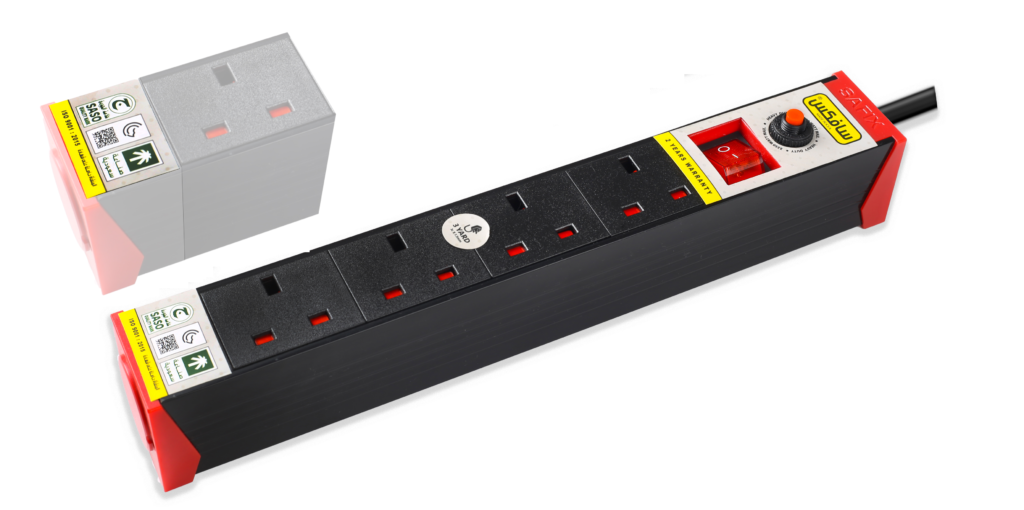
Common Mistakes with Extension Cords
Proper usage of your extension cords can extend their lifespan and ensure they remain safe to use. Follow these tips:
- Placing Liquids Nearby: Don’t put drinks or liquids near extension cords to prevent electrical hazards and potential short circuits.
- Leaving Cords Plugged In: Unplug charging cords when not in use to avoid wear and energy waste.
- Overloading: Avoid plugging in devices that exceed the cord’s maximum rated capacity. Overloading can cause overheating, increase the risk of fire, and damage the cord.
- Avoid Knots: Never tie cords in knots, as this can damage the internal wires and reduce their efficiency.
Conclusion: Keep Safety at the Forefront
Choosing the right extension cord is about more than just convenience—it’s about safety. By considering the factors above and following best practices, you can prevent electrical hazards and ensure that your home or workplace remains a safe environment. Remember, at SAFIX, we’re dedicated to providing you with high-quality extension cords and PDUs that meet the highest safety standards. Stay safe, and power up with confidence!